


The labor market is back from the dead


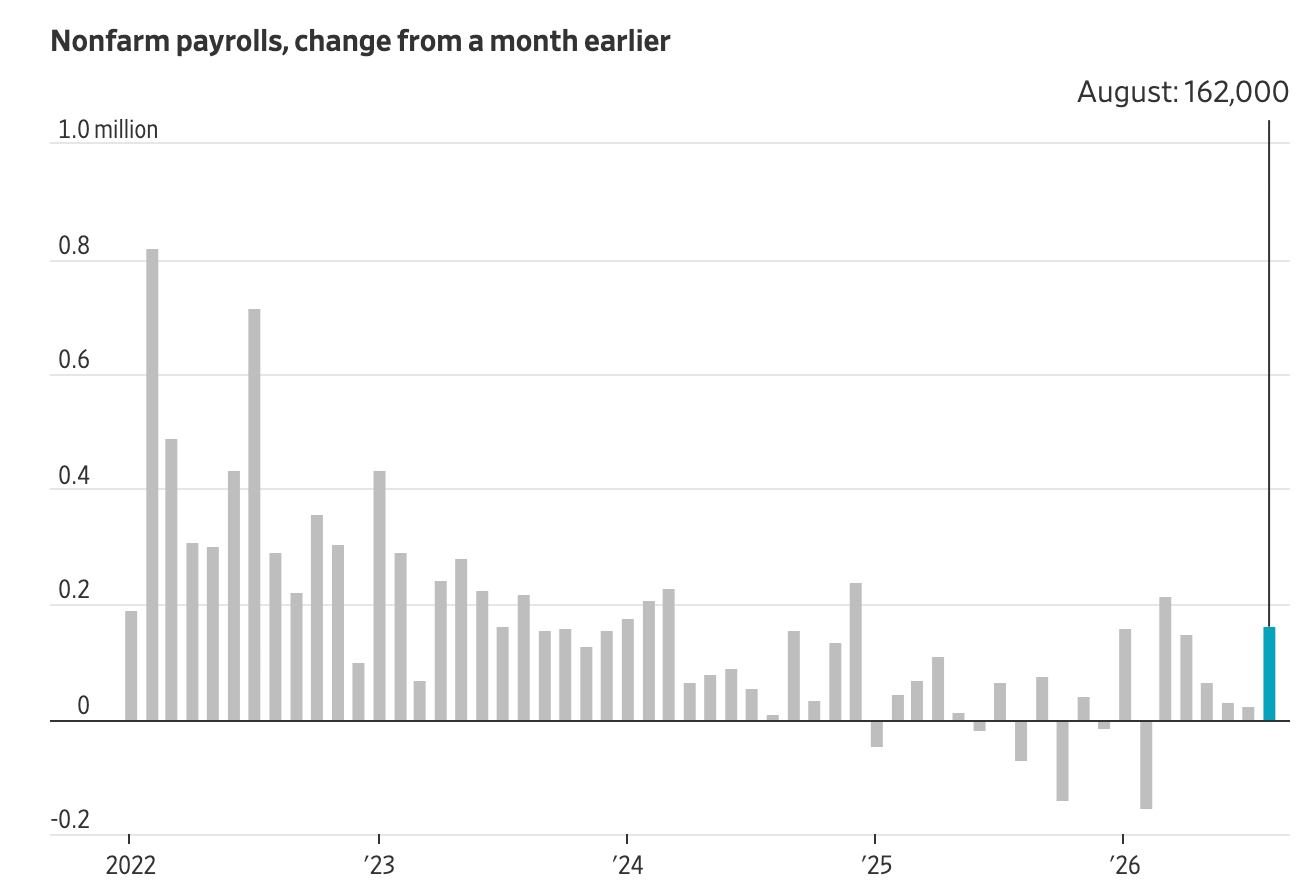
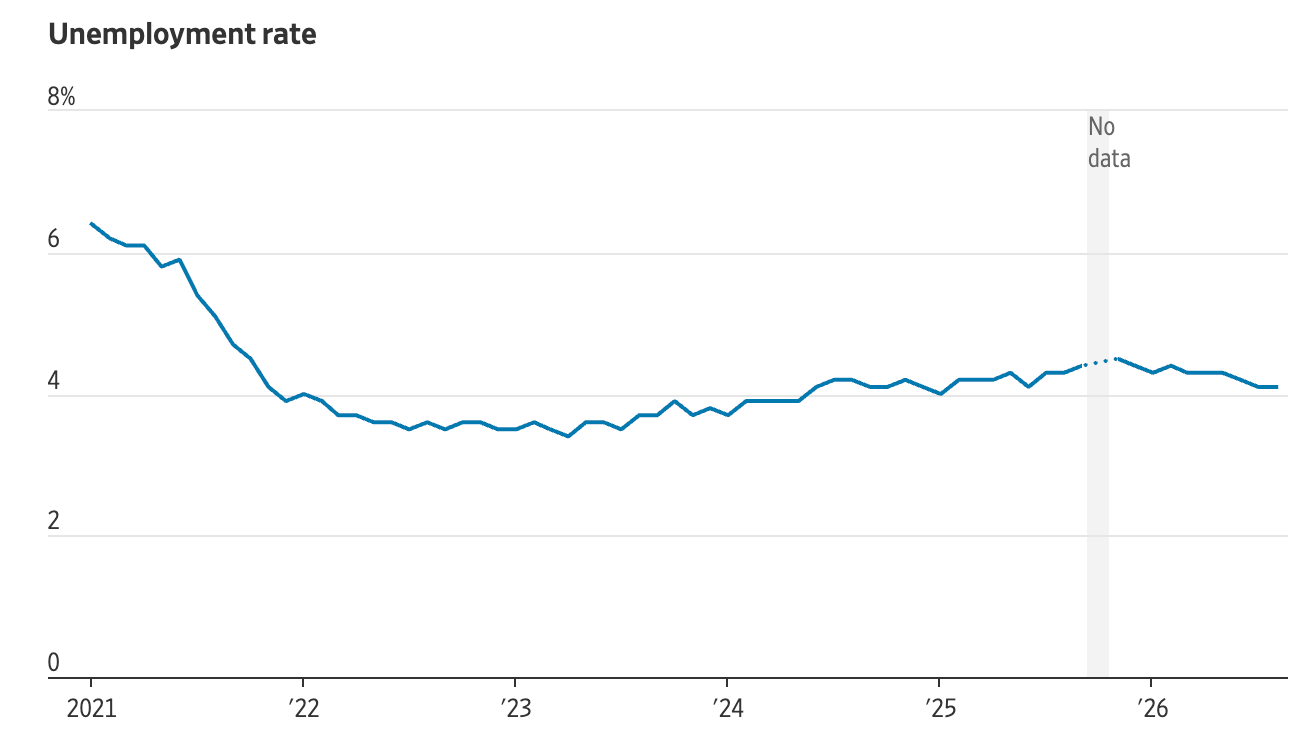
Employers added 162,000 jobs in August, according to Friday’s Bureau of Labor Statistics report, nearly triple the roughly 56,000 economists expected and more than five times the average monthly gain of just 31,000 over the previous year. The unemployment rate remained at 4.1%. And, even better, June and July were revised up by a combined 55,000 jobs. This turned July’s previously reported 23,000-job decline into a gain of 21,000. The first negative payroll month since 2020 lasted about four weeks before paperwork killed it.
Let’s put this into context. Historically, the U.S. economy has averaged way more monthly job additions than it’s been reporting in recent years. Downward revisions left 2025’s monthly average looking like a major slowdown — we averaged just ~15,000 jobs added per month last year. This stands in stark contrast to: pre-COVID, when the economy averaged anywhere from ~150,000 to ~225,000 additions each month; the post-pandemic rebound, which saw insane numbers like 608,000 per month added in 2021; and the 2022-2024 corridor, where things again returned to mid-150s on average.
Visual: WSJ
So last year got absolutely stamped out — likely due to tariff uncertainty, less immigration, higher interest rates, and AI — and now, 2026 has been trying to figure it out ever since. It’s been a choppy year, but the economy has averaged roughly ~71,000 additions per month so far, a clear rebound.
This leaves us with 2026. This year has seen jobs reports oscillate between boom and bust, leaving us consistently cycling through two narratives: “AI + fewer workers = lower jobs reports”, and “Oh, maybe not yet.” The first boom cycle arrived in late Q2, when the BLS printed three jobs reports in a row of 100,000+ added during March, April, and May — then June delivered a reality check, and July’s initial report indicated the economy actually lost ~23,000 jobs during the month. The summer doldrums, indeed.
This report gets even better, though. Not only did the economy add far more jobs, but: The last two months were revised upward, unemployment remained the same, and the labor force actually increased in size for the first time in months. The labor force grew by 683,000 people, driving the labor-force participation rate up from 61.4% to 61.6%. Normally, that many people entering or returning to the workforce could push unemployment higher simply because more people are suddenly looking for jobs. Instead, unemployment stayed flat, suggesting the economy actually absorbed most of the additional workers.
Visual: WSJ
So, yes: objectively good report, but there is still enough weirdness underneath it to prevent anybody from hanging a Mission Accomplished banner over Indeed. Restaurants and bars added 59,000 jobs, while local-government education added another 42,000, largely reversing an education decline from July. Together, those two categories accounted for roughly 62% of August’s entire payroll increase. Construction added 22,000 and manufacturing 16,000, which gives the report somewhat more breadth, but this was not exactly an economy suddenly rediscovering white-collar hiring. The information sector actually lost 23,000 jobs.
That’s relevant here, because August’s rebound sits against a labor market that had been unusually stagnant for a few months. July’s JOLTS report showed employers hiring only about 5.05 million people, down 278,000 in one month, even as advertised job openings increased. Layoffs remain extremely low, and workers are quitting less frequently. Employers apparently like having employees considerably more than they like acquiring new ones.
August therefore doesn’t necessarily kill the “no hire, no fire” economy, but it does complicate it. Employers added 162,000 payroll jobs, the labor force expanded for the first time since May, and fewer Americans were stuck working part-time because they couldn’t find full-time work. After months of deteriorating hiring data, that is real movement. The question now is whether August marks the beginning of a genuine thaw or simply one unusually good month inside a labor market that still has very little turnover.
Nevertheless, beyond the good, there are flip-side implications. Over the past ten days, markets have swung from worrying that Fed Chair Kevin Warsh had become hawkish based on his comments at Jackson Hole — stocks sold off, rate-hike odds increased, and yields rose. Then, last week, another Fed Governor suggested he’d be open to a cut if conditions allowed (shocking). Rate-hike odds fell, and markets rebounded. Now, we have yet another confounding U-turn: A potentially strong labor market that subsequently increases rate hike odds and inflation concerns yet again. Right on time, stocks and bonds sold off in unison Friday after this report.
The Fed therefore gets an increasingly inconvenient combination: Businesses are finding ways to produce and sell more without dramatically expanding payrolls, workers who already have jobs mostly keep them, and overall employment just posted its strongest gain in months. There is considerably less evidence today that high interest rates are causing enough labor-market damage to justify relief.
Basically, if we keep getting this much conflicting data and clashing narratives, the Fed remains increasingly inclined to do nothing at all — rates stay steady, borrowing costs remain elevated, and uncertainty rules the room. Eventually, something in this economy will have to pick a position.
The next decision now rests much more heavily on inflation. Producer prices arrive September 10, and CPI follows September 11. If those reports cool convincingly, the Fed can still argue that inflation is improving enough to leave rates alone. If they don’t, August just removed one of the best reasons not to hike.
For workers, Friday was good news. For anyone currently attempting to finance approximately anything, congratulations on the strong economy.
Answers to your questions
Yes. Origin offers partner access so you can manage your finances together at no additional cost. You’ll be able to filter transactions by member—making it easy to see which spending is yours and which belongs to your partner.

Yes. You can edit existing transactions and add new ones directly in Origin, so your records stay accurate and personalized.
Origin connects securely through trusted partners including Plaid, MX, and Mastercard.
Yes. Origin supports CSV uploads. You can upload a .csv file of your transactions, and we’ll import them into your account.
Yes. Your data is protected with bank-level security and advanced encryption. When you connect accounts through Origin, your login credentials are never shared with us. Instead, our partners generate secure tokens that let Origin access only the data you authorize—keeping your personal information private while enabling personalized insights.
Yes. You have full control to organize your spending in Origin. Transactions are automatically categorized by Origin, but you can always edit categories, add your own tags, and filter transactions however you like—so your spending reflects the way you actually manage money.