


Inflation spikes — consumers aren’t happy about it


“A rising tide lifts all boats” is a catch-phrase that…more often than not, is true — and inflation is no exception to the rule. Economists and consumers alike have been worried that an already ruminating inflation rate would spike even higher due to rising fuel prices, and…well, they were on the money.
March’s CPI print came out on Friday, and it came in hot at 3.3%. That’s an 0.9% month-over-month leap, and the highest level we’ve seen in two years. We don’t really have to sit around and wonder what caused it, either: Energy prices were up 12.5%, gasoline 18.9%, and fuel oil up 44.2% year-over-year from last March, a drastic acceleration from what we saw in February, pre-Iran conflict. Core inflation, which excludes volatile categories like food and energy, came in at 2.6% — that’s an uptick of just 0.1% from last month and under the 2.7% forecast — compared to the 0.9% leap that headline inflation took.
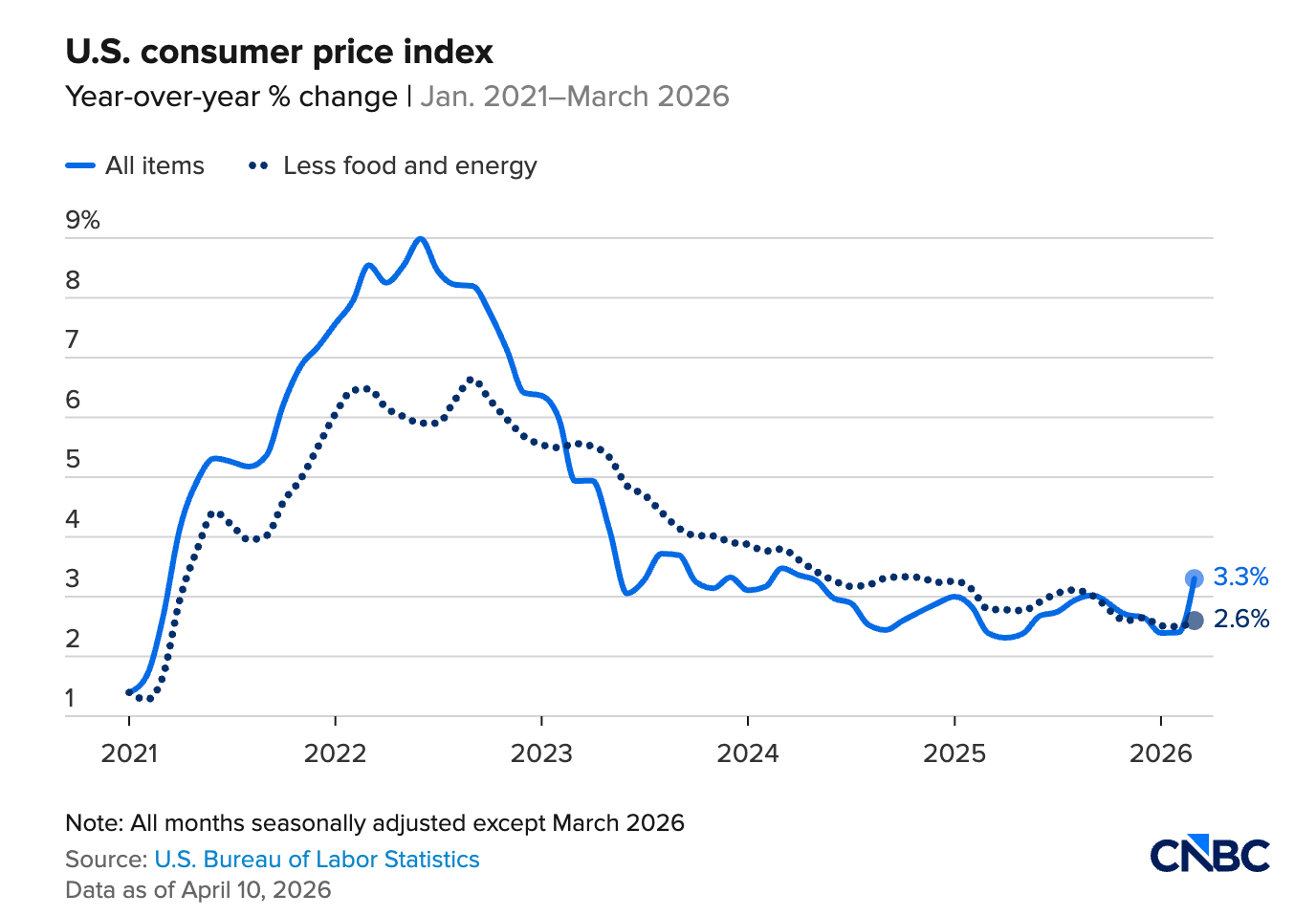
The good news is: This wasn’t exactly a surprise, and it’s explicable — so that’s a bit more palatable than an unexpected bump. This was somewhat evident in how markets reacted on Friday — largely muted — as investors awaited the results of weekend peace talks. The bad news, though, is that for now, no one can really forecast how long energy prices will remain elevated, and subsequently, how long (or how much) it will impact inflation this year.
If energy prices do remain higher for longer, that will eventually trickle into other categories as well — oil is used in…everything. That gloomy potential is clearly weighing on consumers, too. The University of Michigan also reported its April Consumer Sentiment data on Friday, and it came in at a literal all-time low — dropping 11% on the month.
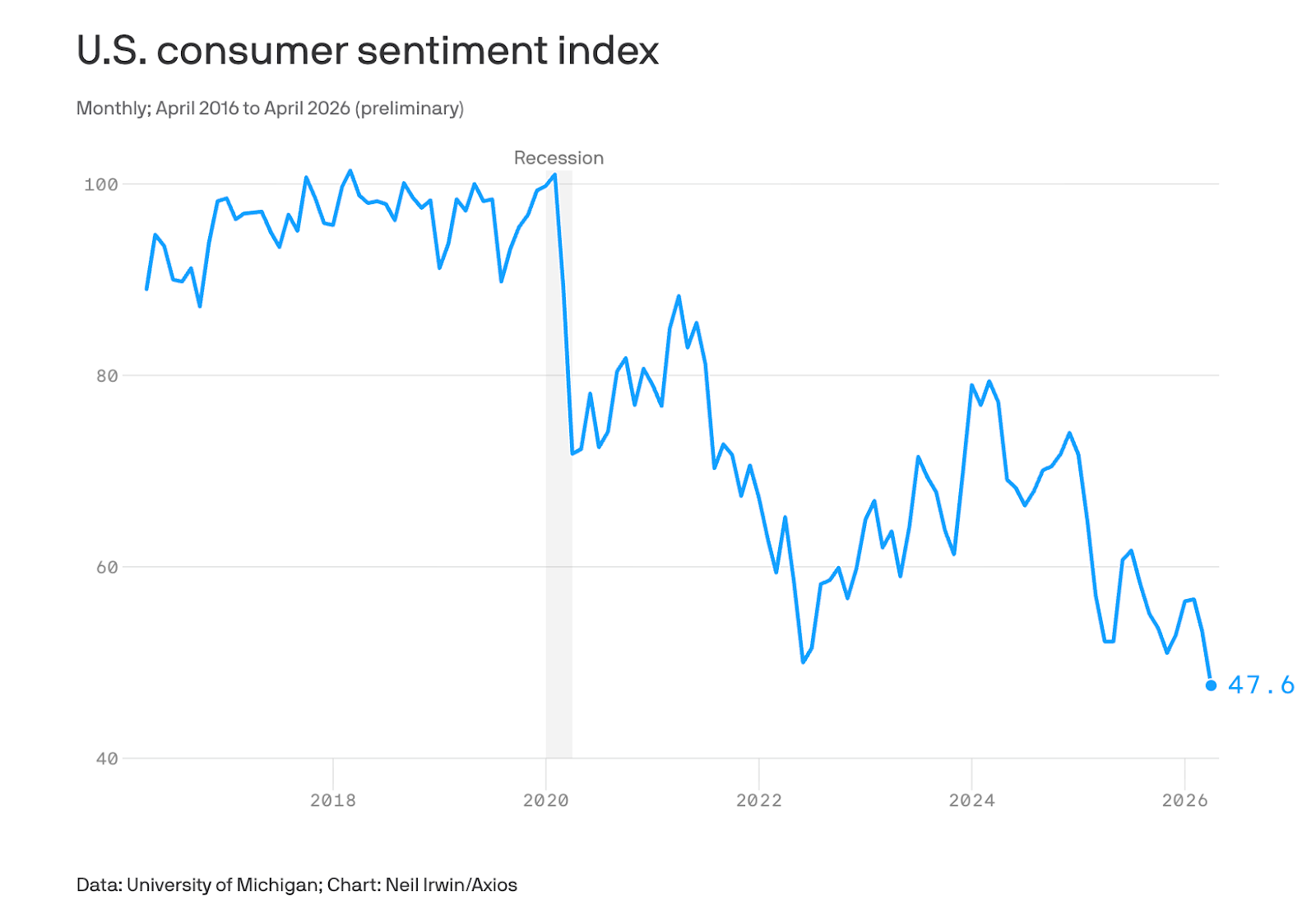
Data: U Michigan | Visual: Axios
And it goes without saying that this doesn’t bode well for potential rate cuts any time soon. The Fed was already very likely to hold again this month as inflation remained above 2%, the labor market looks dodgy, and a newfound political conflict had arisen — this inflation report, though, was certainly a nail in that coffin. Some recent reports indicated that certain Fed officials were even open to the possibility of a hike this year, though in the minority.
Long story short: Nothing in this data batch was surprising, but it was certainly unsettling — and it’s yet another conflicting signal for investors and consumers to metabolize.
Answers to your questions
Yes. Origin offers partner access so you can manage your finances together at no additional cost. You’ll be able to filter transactions by member—making it easy to see which spending is yours and which belongs to your partner.

Yes. You can edit existing transactions and add new ones directly in Origin, so your records stay accurate and personalized.
Origin connects securely through trusted partners including Plaid, MX, and Mastercard.
Yes. Origin supports CSV uploads. You can upload a .csv file of your transactions, and we’ll import them into your account.
Yes. Your data is protected with bank-level security and advanced encryption. When you connect accounts through Origin, your login credentials are never shared with us. Instead, our partners generate secure tokens that let Origin access only the data you authorize—keeping your personal information private while enabling personalized insights.
Yes. You have full control to organize your spending in Origin. Transactions are automatically categorized by Origin, but you can always edit categories, add your own tags, and filter transactions however you like—so your spending reflects the way you actually manage money.